why are most people right-handed?
What is the effect of the asymmetry in the human brain on our lives, our culture, and our language?
About 10% of people in Western societies are left-handed, although there are differences between countries, Holland, Belgium and England having the highest rates in Europe. Historically, humans have had a minority of left-handers for at least 100,000 years, and possibly half a million years. Such consistency implies that handedness may be genetic in origin, and that is supported by left-handedness tending to run in families, and identical twins being more similar than non-identical twins. This consistency in the majority of right-handed people also raises the question: why isn’t everybody right-handed? Is there some advantage in being left-handed?
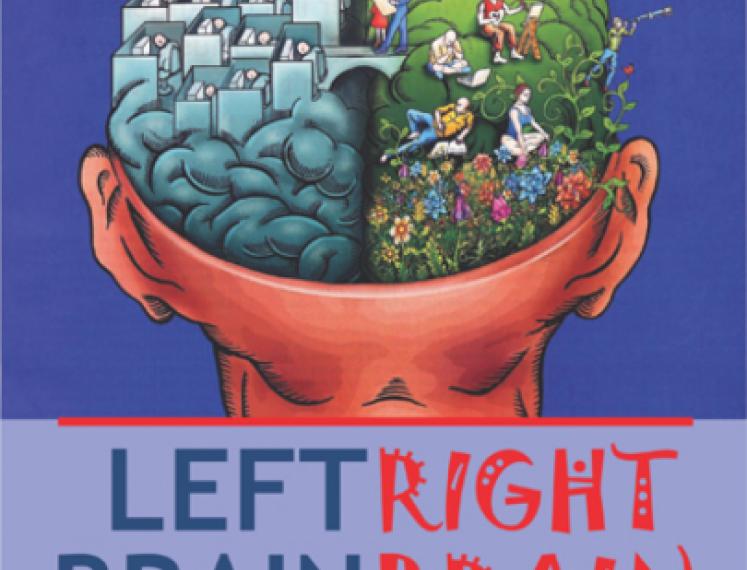
Handedness is not the only asymmetry in the human brain, speech and language are also lateralised, with 95% of people having language in the left half of the brain. Why does our brain have such so-called functional asymmetries? What is the evolutionary advantage of having two brain hemispheres?
Chris McManus is Professor of Psychology and Medical Education, University College London. After training as a medical doctor his PhD was on the neuropsychology of human handedness. His book on asymmetry, Right Hand, Left Hand: The origins of asymmetries in brains, bodies, atoms and cultures won the 2003 Aventis Prize for Science Books, and for some eccentric work on asymmetries in art he received the 2002 IgNobel Prize.
Interesting links
UCL Prof. Chris McManus
Left Hand Right Hand site with info and tests